Loading...
Serving Glendale, CA and surrounding areas. (747) 372-8205
Cracked panels and broken curb lines are more than an eyesore - they are tripping hazards and drainage failures waiting to worsen. We form, pour, and finish concrete with proper base prep and the right slope so water moves away from your home, not toward it.
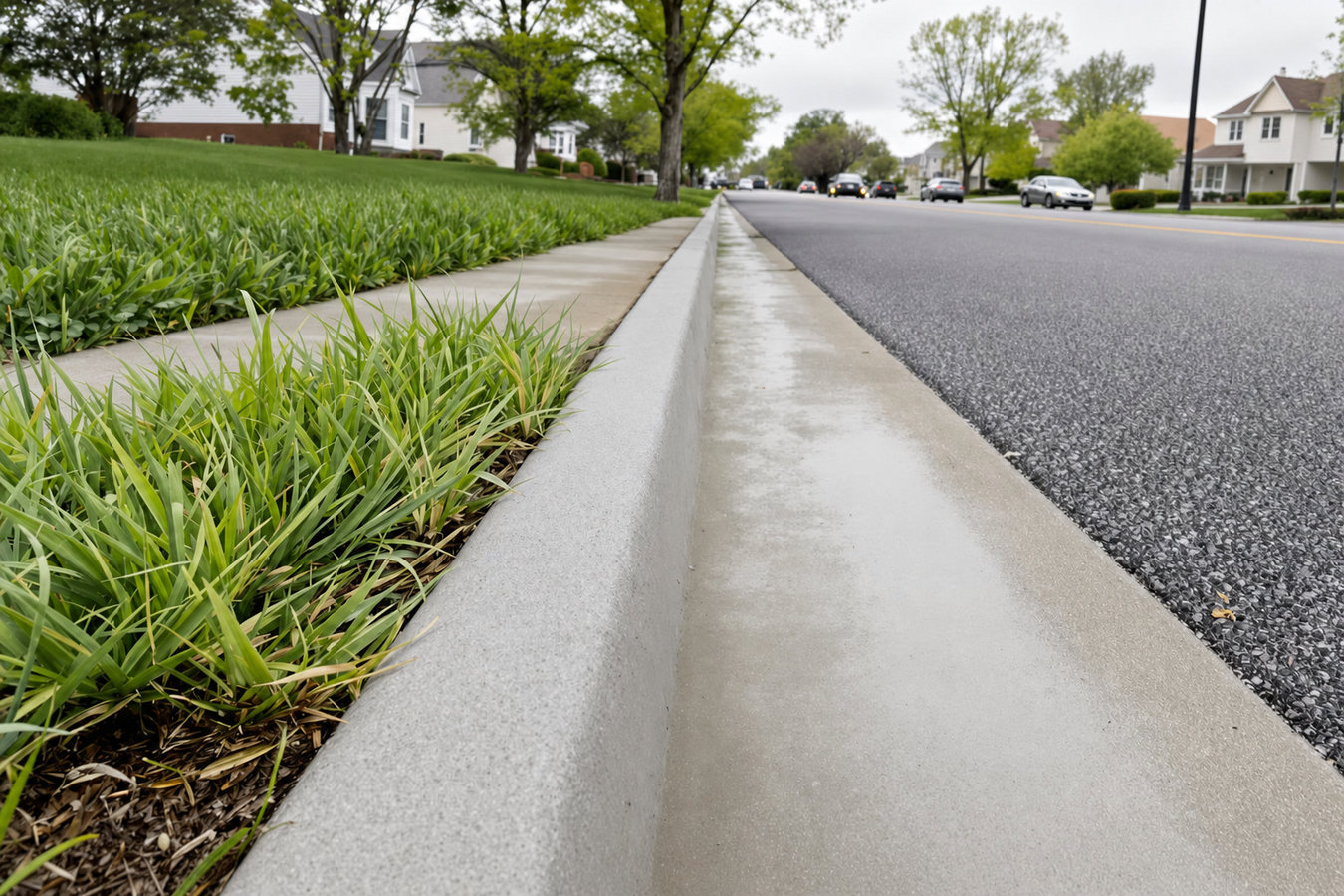
Concrete curbing and sidewalk installation in Glendale, CA means a crew forms, pours, and finishes fresh concrete along the edges of your property or along walkable paths on your lot, producing a clean border or smooth walking surface - most residential projects take one to two days of active work, with a few additional days for curing.
The work that determines whether concrete lasts happens below the surface. Properly compacted soil, a gravel base layer where the ground needs it, and the right drainage pitch away from your home are what separate concrete that holds for decades from concrete that cracks within the first few seasons. You can judge the quality of a finished job before it ever fails by checking the slope and the edge detail - good work drains correctly and has clean, consistent transitions where the new pour meets existing surfaces.
Most residential projects combine curbing and a sidewalk or path in the same job. If your property also needs a grade correction before the concrete goes in, we can coordinate that with our driveway paving work so everything is level and draining correctly before the first form is set.
If you can feel a lip or bump walking across your sidewalk, or see cracks running across the panels, the concrete has shifted enough to become a tripping hazard. In Glendale, expansive clay soils and summer heat cycles accelerate this movement, so a hairline crack can widen noticeably within a season or two.
Standing water on or near your sidewalk after rain means the slope has failed or the surface has settled unevenly. In a climate where heavy rain arrives in bursts after long dry periods, poor drainage can push water toward your foundation rather than away - a problem that compounds over time.
When the edges of your curbing or sidewalk start to flake, chip, or crumble, the surface layer is breaking down. This is common in older Glendale properties exposed to decades of sun and heat. Once the surface starts to go, deterioration tends to speed up, and patching rarely holds as well as a fresh pour.
Glendale's mature street trees are a known cause of sidewalk heaving. If a panel has been pushed up from below, or if roots are visibly breaking through, the damage will only grow. Addressing it now, before the root system expands further, is far less disruptive than waiting.
We handle concrete curbing and sidewalk work at all scales - from a single replaced panel to a full front-walk installation combined with a new curb line. Every project gets an honest site assessment before the estimate, because the base and drainage conditions on your specific lot shape what the work actually needs to involve. If the job requires asphalt milling on an adjacent surface before the new concrete ties in cleanly, we plan for that upfront so the finished result looks and performs as a single system.
Driveway apron work and curb cuts sit at the boundary of your property and the public right-of-way. When that work is in scope, we handle city permit coordination and any required inspections as part of the job - not as a separate process you need to manage. For homeowners whose properties also need a fresh paved surface, our driveway paving service can be combined with curbing and sidewalk work so both are completed at the same time.
Homeowners with cracked, uneven, or root-heaved panels who need a section removed, re-based, and poured to a smooth, level finish.
Properties needing a defined border along driveways, garden beds, or property edges - a clean curb line that contains landscaping and improves drainage.
The transition between your driveway and the public street, where city right-of-way requirements and heavy vehicle loads call for proper concrete work and permit coordination.
Homeowners adding a front walk, side path, or garden walkway - formed, poured, and finished to complement existing hardscaping.
Glendale sits in the San Fernando Valley foothills and experiences long, hot summers with temperatures regularly above 95 degrees Fahrenheit. Unlike colder climates where ice is the main enemy of concrete, here it is heat cycling and the soil beneath. Much of the greater Glendale area sits on expansive clay soils that swell when wet and shrink when dry - a seasonal rhythm that puts constant upward and downward pressure on anything poured on top of it. Concrete that was not prepared for this ground movement will crack, shift, and heave on a predictable timeline. That is why base preparation is the most important part of the job, not an optional upgrade. Homeowners across the Montrose area, where clay soils are common and streets are lined with mature trees, see sidewalk heaving and edge cracking frequently - and the fix that lasts is always a new pour on a properly prepared base, not a patch over the existing one.
Seasonal rain timing also shapes how concrete work should be planned here. Southern California's rainy season runs roughly from November through March, and fresh concrete cannot be poured in heavy rain. The long dry season - spring through fall - is the most reliable window for concrete projects in Glendale. Homeowners in Glendale and neighboring Burbank who book in late spring or early fall get the best combination of dry conditions and moderate temperatures - which means better curing results and a more durable finished surface. For more on how drainage affects concrete longevity, the Portland Cement Association publishes guidance on residential concrete best practices, including drainage slope requirements.
We come to your property, walk the area with you, and measure what needs to be replaced or newly installed. We look at the existing surface, base condition, slope, and complicating factors like tree roots. You receive a written estimate covering removal, base prep, the pour, and finishing. We respond within one business day.
If the work touches the public sidewalk strip or curb cut, we determine whether a city permit or inspection is required and handle the paperwork for you. This step can add time to the timeline, but knowing upfront means no delays or surprises partway through the job.
The crew removes old concrete, hauls it away, and prepares the ground beneath - grading and compacting the soil and adding a gravel layer where needed. This step is the foundation of a long-lasting result. Rushing the base prep is the most common cause of early cracking.
We set forms, pour concrete, and finish to the specified texture - broom finish is standard for walkways for slip resistance. Expansion joints are placed at regular intervals. Foot traffic is restricted for at least 24 to 48 hours, and we let you know exactly when each area is safe to use.
We walk your property, explain what the work involves, and give you a clear written estimate - no pressure, no guesswork.
(747) 372-8205California requires a valid state license before performing concrete and paving work. You can verify our license status through the Contractors State License Board at cslb.ca.gov - it confirms we are legally authorized and carry the required insurance to work on your property.
When work touches the public sidewalk strip or curb cut, city approval is often required. We know Glendale's right-of-way process and handle the permit coordination so your project moves forward without stalling on city paperwork. The job is done to city standards from day one.
Much of the greater Glendale area sits on soils that swell when wet and shrink when dry. We assess and compact the base on every pour - not as an upsell, but because skipping it is the most reliable way to produce concrete that cracks within the first year.
Glendale's summer temperatures regularly top 95 degrees Fahrenheit. We use curing methods suited to hot-weather pours - covering or wetting the surface to slow drying - so the finished concrete resists surface cracking and holds its strength through the region's heat cycles.
Every one of these points matters because concrete is a long-term investment. Getting the base right, curing for the climate, and handling city requirements correctly means your sidewalk and curbing will still look and function well a decade from now - not just the first summer.
When an adjacent asphalt surface needs to be brought back to grade before new curbing or a sidewalk panel connects to it, milling removes the old layer cleanly.
Learn MoreNew concrete curbing pairs well with a freshly paved driveway - both improve curb appeal and drainage at the same time.
Learn MoreGlendale's dry season books fast - call now or request a free estimate to lock in your spot.