Loading...
Serving Glendale, CA and surrounding areas. (747) 372-8205
Paving over a deteriorated driveway just moves the problem forward by a few years. Milling grinds out the failed layer entirely so the new asphalt bonds to a solid base - not to the cracked, softened material that caused the original failure.
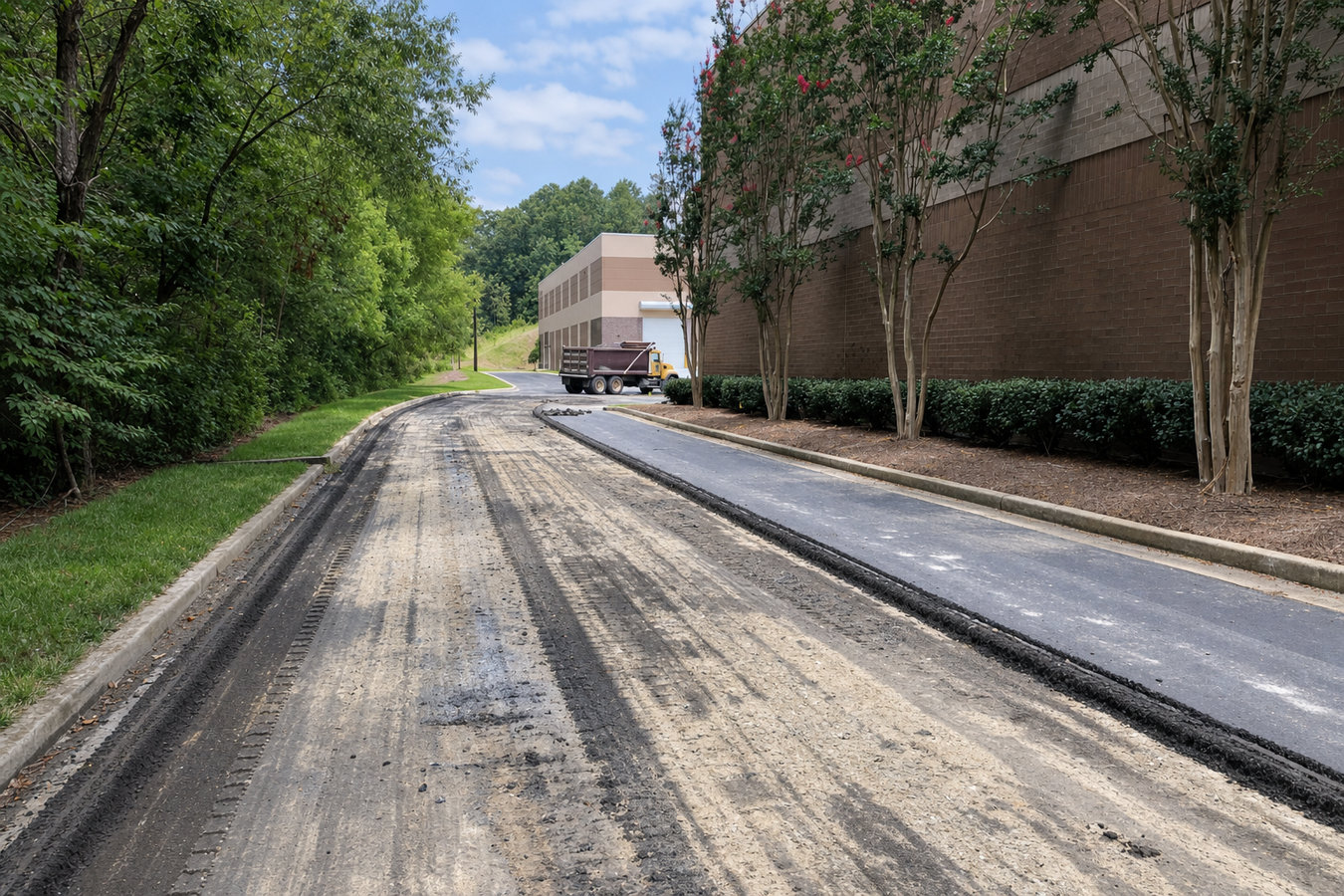
Asphalt milling in Glendale, CA is the process of grinding down and removing the top layer of an existing paved surface using a machine with a rotating drum studded with cutting teeth, leaving a clean textured base ready for fresh asphalt - a typical residential driveway can be milled in a few hours to a single day, with repaving following within a day or two after the base is inspected.
The difference between milling and simply paving over an old surface is the quality of what the new asphalt bonds to. Laying a fresh layer directly on deteriorated pavement means the new surface inherits every weak point below it. Milling removes that failed material entirely, lets a contractor inspect and address what the base actually looks like, and gives the new asphalt a solid, consistent surface to grip. The result lasts significantly longer.
Milling makes the most sense when the existing surface is cracked through, has dips or soft spots, or has already been overlaid once before. When the surface is still structurally sound but worn, a simpler asphalt resurfacing may be the right call - a good contractor will tell you honestly which approach fits your situation rather than defaulting to the more expensive option.
When cracks link together in a web or alligator-skin pattern, the surface layer has broken down structurally. In Glendale's heat, those cracks widen quickly once they start, letting water and sun reach the base. Milling removes the failed layer entirely so the new surface starts fresh.
Low spots that collect water after a rain, or raised areas that catch your car's undercarriage, mean the asphalt has shifted or the base beneath it has moved. The clay soils and occasional ground movement common in the Glendale foothills make this kind of unevenness predictable - but it will not correct itself. Milling and regrading addresses the problem at the source.
If you have repaired the same spots two or three times and the repairs keep cracking or sinking, the underlying surface is too far gone for another patch to hold. At that point, milling the whole surface and starting with a uniform base is more cost-effective than continuing to chase individual problem spots.
If your driveway has already been overlaid once or twice, adding another layer can create a lip at the garage door, block a drain, or raise the surface above the adjacent curb. Milling brings the surface back down to the right height so the new asphalt sits flush with everything around it.
We handle asphalt milling on residential driveways and private paved areas throughout Glendale - from straightforward full-surface removals to more complex hillside jobs where drainage grading and equipment access require additional planning. Every milling job includes a base inspection before repaving begins, because the base is what you are actually buying when you invest in milling over a simpler overlay. When the base inspection reveals drainage problems or soft spots, we address those directly rather than covering them back up. For more on how asphalt recycling works and its environmental benefits, the National Asphalt Pavement Association covers the recycling process in detail.
When milling is part of a larger surface reset, we can schedule drainage solutions and asphalt resurfacing together so the drainage correction and the new surface go in as a single coordinated job. For jobs where the milling brings a surface down in height to properly connect with adjacent concrete curbing or a garage threshold, we plan that transition before the machine starts so the finished height is right from day one.
Driveways with widespread cracking, dips, or multiple failed patches where a complete surface reset gives better long-term value than another overlay.
Properties where only part of the surface has deteriorated - the milling depth and extent are matched to where the damage actually is.
Glendale properties on sloped lots where drainage grading and careful equipment operation are required to avoid base erosion on the newly exposed surface.
Jobs where an adjacent asphalt surface needs to come down in height before new concrete curbing, a garage threshold, or a drain fitting can connect to it correctly.
Glendale sits in the foothills of the San Gabriel Mountains and experiences long, hot summers with intense direct sun. Asphalt absorbs heat and expands and contracts daily, which over time causes surface cracking, raveling, and softening - especially on south- and west-facing driveways that bake in the afternoon sun. This thermal stress is the single biggest reason Glendale driveways deteriorate faster than homeowners expect. When that deterioration has progressed to alligator cracking or significant surface dips, adding another layer on top just delays the same failure cycle. Milling removes the problem rather than covering it, and the new surface starts from a genuinely solid foundation. Homeowners in Glendale and in neighboring Pasadena - both areas with a high share of older homes and mature driveways - are the most likely to find that milling and repaving is the more honest investment compared to a third or fourth overlay.
Glendale also has a significant number of properties on hillside lots with sloped or curved driveways. Drainage on those lots is not an afterthought - it is built into every milling and repaving job we do there. A surface that does not shed water correctly on a hillside will develop base erosion and new surface failures within one or two rainy seasons. The dry stretch from late spring through early fall is the best window for scheduling milling work, since a freshly milled surface exposed during a rainstorm can lose base material before the new asphalt goes down. For guidance on pavement design and drainage standards, the Federal Highway Administration publishes pavement maintenance resources that apply at any scale.
Call or message us to describe your surface and schedule a visit. We come out, walk the driveway with you, measure the area, and assess the condition of the existing asphalt and the base beneath it. You receive a written estimate that clearly separates the milling cost from the repaving cost. We respond within one business day.
Once you accept the estimate, we schedule the job during Glendale's dry season for the best results. If work will touch the area near the public street, we confirm whether a city permit is needed and handle that process before the crew arrives. You get a start date and a timeline for both milling and repaving.
The crew arrives with the milling machine and a dump truck. They grind down the existing asphalt to the agreed depth across the full surface. The ground-up material is loaded directly into the truck and hauled away for recycling. Most residential driveways are milled in a few hours to a single day.
Once the old asphalt is removed, we inspect the base material underneath. Soft spots, eroded areas, or drainage issues - common on hillside Glendale properties - are addressed before paving begins. Fresh hot-mix asphalt is then laid over the prepared base and compacted. Most driveways are ready for vehicle traffic within a day.
We come out, assess your surface, and give you a straight recommendation - milling, overlay, or something else - at no cost.
(747) 372-8205California requires a valid state license before performing milling and paving work. You can verify our license through the Contractors State License Board at cslb.ca.gov in under two minutes - confirming we are legally authorized and carry the required insurance to work on your property.
We inspect the exposed base material after milling and before we lay new asphalt. In Glendale, where clay soils and hillside drainage issues are common, a new surface laid over a bad base will fail on the same timeline as the one we just removed. That inspection step is not optional here.
Many Glendale homes sit on steep or curved driveways along the Verdugo Mountain foothills. We work regularly on hillside properties - accounting for equipment access, drainage grading, and the slower pace that steep lots require. Proper drainage on a sloped driveway is what separates a result that lasts from one that fails after the first rainy season.
We break out milling costs and repaving costs on every written estimate so you know exactly what you are paying for. A contractor who bundles everything into one number cannot tell you what you are getting - and cannot be held to specific work standards for each phase of the job.
Milling is a bigger investment than a patch or a quick overlay, so the contractor you hire needs to do it right. The proof points above are the specific things that separate a milling job that delivers on its promise from one that leaves you in the same position three years later.
When milling reveals base erosion or drainage problems beneath the surface, correcting the water flow path before repaving keeps the new asphalt from failing for the same reason.
Learn MoreFor surfaces still structurally sound but showing wear, resurfacing applies a fresh layer - an alternative to milling when the base and depth make an overlay appropriate.
Learn MoreCall now or request a free estimate to lock in your project before the dry-season schedule fills up.