Loading...
Serving Glendale, CA and surrounding areas. (747) 372-8205
Glendale winter rains move fast. A sealed crack keeps water out of your base - and out of a far more expensive repair bill. We clean every crack thoroughly and seal it with flexible rubberized material built for Southern California sun and temperature swings.
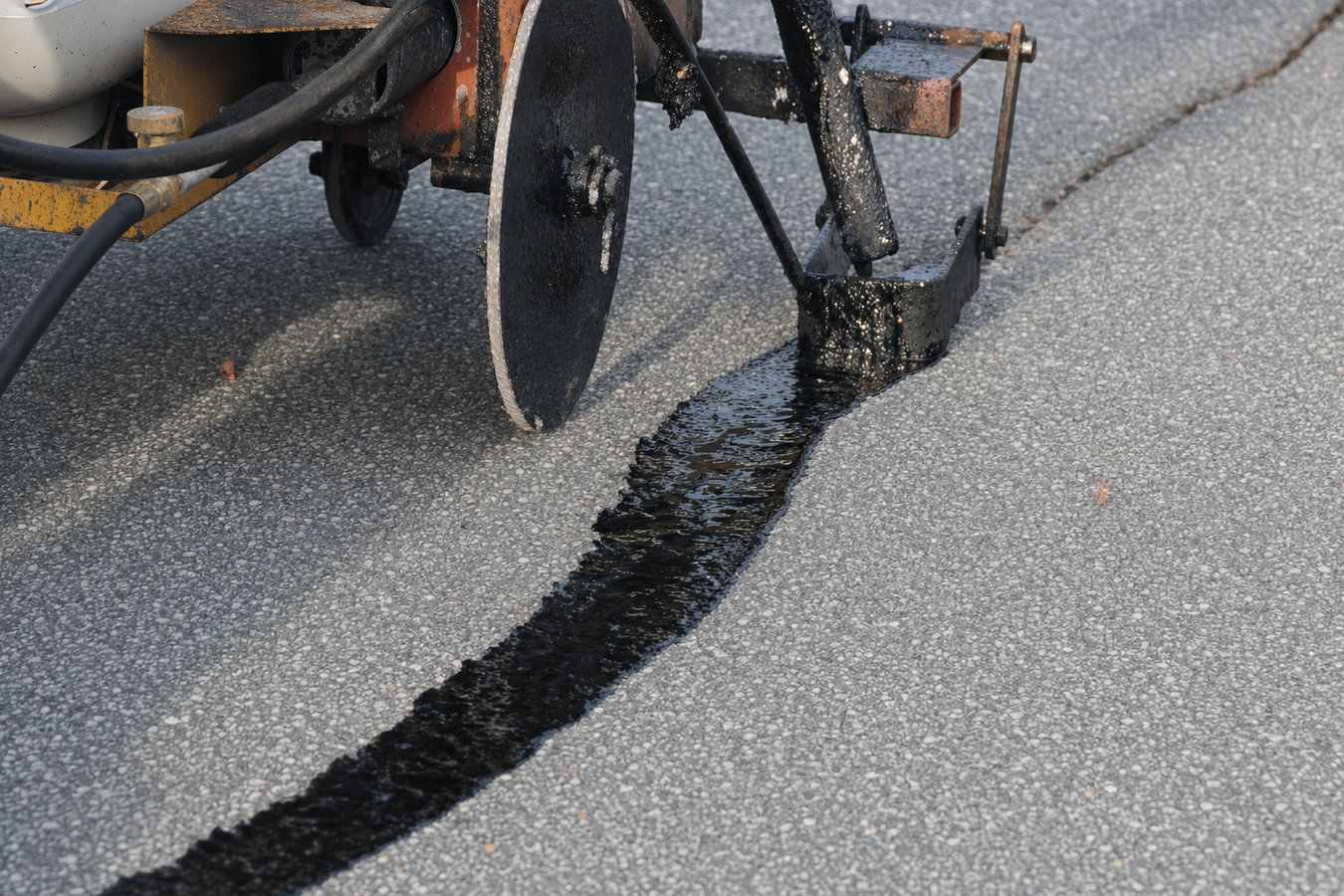
Asphalt crack sealing in Glendale, CA means cleaning each crack thoroughly and filling it with a heated rubberized sealant that bonds to both sides of the opening and cures to a flexible, watertight seal - most residential driveways are completed in a few hours with light foot traffic allowed the same day.
This is not a cosmetic fix - it is a protective one. Every open crack in your driveway is a path for water to reach the base beneath. In Glendale, where rain arrives fast and hard during winter, that water intrusion is the number one reason driveways fail from the inside out. Sealing cracks now costs a fraction of what a repave runs later. If the cracks you are seeing are accompanied by surface damage, pairing crack sealing with broader asphalt sealcoating gives the entire surface a uniform protective layer that slows future cracking.
The quality of the job depends almost entirely on the prep step. The crew must clean every crack with compressed air or a wire brush before any sealant goes in - grit and debris left inside a crack will prevent the sealant from bonding and it will peel out within a season. Watch for a contractor who takes time on prep, not one who skips straight to pouring. The National Asphalt Pavement Association outlines best practices for this work at asphaltpavement.org.
If you can see cracks from the sidewalk, they are wide enough to let water in. In Glendale, where winter rains arrive in concentrated bursts, even a modest crack can funnel a surprising amount of water into the base layer during a single storm - and the damage compounds from there.
Asphalt that has lost its dark color and looks chalky or gray has had its protective oils cooked out by the sun. That dried-out surface cracks much more easily, and any existing cracks will grow faster. This is a very common sight in Glendale's sun-heavy climate and a clear signal that protective maintenance is overdue.
If you have been watching a crack for a season or two and it is clearly growing, the damage is progressing. Cracks that are widening are actively letting in more water and debris with every rain. Sealing them now, while they are still manageable, is far less expensive than waiting until the surrounding pavement starts to break apart.
If water sits in or alongside a crack after Glendale's winter rains, that water is finding its way into the base. Repeated soaking weakens the foundation under your pavement - what starts as a surface crack can turn into a sunken or broken section within a season or two.
We seal cracks on residential driveways, commercial parking lots, and access drives throughout Glendale and surrounding communities. Our process uses hot-pour rubberized sealant - the same flexible material specified for Southern California conditions where pavement expands and contracts with temperature swings. The right crack sealing job protects the surface for several years before it needs attention again.
Some customers schedule crack sealing as a stand-alone repair. Others pair it with asphalt sealcoating on the same visit - the sealcoat covers the whole surface and makes the sealed cracks blend in. If your surface has damage beyond what sealing can address, we will tell you honestly and can discuss whether commercial asphalt paving or a full residential repave makes more sense for your situation.
Homeowners with surface cracks on asphalt driveways - the right move before Glendale's rainy season pushes water into the base and turns a simple repair into a costly replacement.
Business owners and property managers with cracking asphalt on parking lots or access drives - sealing cracks on schedule extends surface life and reduces liability from deteriorating pavement.
Properties that have had a sealcoat but have developed new cracks - targeted crack sealing addresses the openings before moisture gets in and undoes the protection the sealcoat provides.
Glendale sits in the San Fernando Valley foothills and receives intense Southern California sunshine year-round. That relentless UV radiation breaks down the binder in asphalt, making it dry, brittle, and prone to cracking faster than in cooler or cloudier climates. The driver of cracking here is not freeze-thaw cycles as in colder states - it is the daily heating and cooling combined with long-term sun damage. That means crack sealing is a regular maintenance need in Glendale, not a one-time fix. Homeowners in Glendale who seal cracks on a schedule consistently avoid the more expensive base repairs that follow water infiltration.
Glendale also has a significant amount of hillside terrain along the Verdugo Mountain foothills. Ground movement on sloped lots can cause cracks to reopen more quickly than on flat surfaces - especially in areas with older grading or expansive clay soils. If your driveway is on a slope, your contractor should assess whether the cracking pattern suggests active ground movement before deciding on the right treatment. We also serve neighboring Burbank and surrounding communities, where similar hillside and heat conditions apply.
Describe what you are seeing - how many cracks, roughly how long they are, and where they are on the property. We respond within one business day and can often schedule a free on-site look that week. You receive a written quote that covers exactly what the job includes.
The contractor walks the surface and assesses each crack - width, depth, whether the edges are stable, and whether the base seems solid beneath. Any areas that are too far gone for sealing and need patching or repaving will be flagged. This is the moment to ask questions.
The crew starts by blowing out loose debris, dirt, and vegetation from every crack with compressed air or a wire brush. In Glendale's dusty, dry conditions this step is especially important - grit left in the crack prevents the sealant from bonding. A crew that rushes this step produces a seal that peels out within a season.
Once cracks are clean and dry, heated rubberized sealant is carefully applied, slightly overfilling each crack so it can be leveled flush with the surface. In Glendale's warm weather, curing typically takes a few hours - your contractor will give you a specific wait time and advise you to plan for parking elsewhere for the rest of the day.
Free written estimate. Licensed and insured. We respond within one business day.
(747) 372-8205We hold an active California contractor's license you can verify at cslb.ca.gov. We carry liability insurance and workers' compensation on every job - protections that matter if anything goes wrong on your property. Ask any contractor you consider for their license number before signing.
The single most common reason crack sealing fails early is a crew that skips or rushes the cleaning step. We clean every crack thoroughly before any sealant goes in - because a bond that holds through Glendale's dry summers and wet winters starts with a properly prepped surface.
Sealing in the right conditions - warm, dry pavement - produces a bond that lasts significantly longer than work done in marginal weather. We schedule crack sealing projects during Glendale's dry months and communicate clearly about weather windows, so you get maximum value from every job.
Not every crack is a good candidate for sealing. If an area has failed too far - alligator cracking, crumbling edges, or a soft base - we will tell you that honestly and explain what repair makes more sense. We do not sell sealing on areas that need something else.
Every crack sealing job we do starts with a thorough on-site look and ends with a walkthrough to confirm every crack was addressed. We work during Glendale dry season windows to give the sealant every advantage - because a properly timed, properly prepped job is what lasts.
When cracking is too widespread for sealing to be cost-effective, commercial paving replaces the failing surface with a properly graded and compacted new layer.
Learn MoreAfter crack sealing, a full sealcoat gives the entire surface a uniform protective layer that slows UV oxidation and keeps smaller hairline cracks from opening further.
Learn MoreEvery rain event that enters an unsealed crack does more damage to your base - schedule your free estimate now and protect your driveway while the weather is on your side.